Hair Consultation

Hair plantation surgery in india

Results That Are Natural and Care from Experts: What to Expect from Foliage Hair Plantation in India

A lot of people want to look younger and get their hair back, so they look for permanent ways to fix thinning and balding hair. Foliage Hair Expert’s hair plantation surgery in India has become one of the best options for people from all over the world who want to improve their appearance. This procedure is more than just a cosmetic improvement; it is a complex surgical procedure that moves healthy hair follicles to areas where they are thinning. Anyone thinking about a long-term solution for hair loss needs to know the details, biological needs, and recovery stages of this journey. The Science Behind Follicular Redistribution A hair transplant is basically a type of autologous transplantation. This means that the tissue that is donated comes from the patient’s own body, which means that there is no risk of the graft being rejected. The back and sides of the human scalp usually have “permanent zones” where hair is genetically programmed to resist the effects of Dihydrotestosterone (DHT), the hormone that causes androgenetic alopecia. During the surgery, these strong hair follicles are carefully removed and moved to the front or crown areas. These hairs will keep growing naturally for the rest of their lives once they are successfully integrated into the new site. The “Graft Survival Rate,” which is affected by how the tissue is handled outside the body and how quickly the implantation process goes, is a big part of how well this transition goes. The development of surgical techniques Hair restoration has come a long way since the “pluggy” looks of the 1980s. Today, surgeons use micro-surgical tools to place single follicular units, which is like how hair grows in nature. Extraction of Follicular Units (FUE) FUE is the most popular method used in modern clinics. In this method, the surgeon uses a special motorised or manual punch tool to take out each unit. This method is preferred because it doesn’t require big cuts or stitches. It leaves tiny scars that look like dots and are almost impossible to see even with short hair. A lot of people choose this route because it doesn’t have a straight scar. Follicular Unit Transplantation (FUT) The strip method is still very useful for patients who need a lot of grafts in one session, even though it has been around for a while. Technicians can get a lot of healthy tissue by taking a thin strip of scalp and cutting it up with high-powered microscopes. Modern “trichophytic” closure techniques make sure that the linear scar that forms is as small as possible and is often hidden by the hair that grows around it. Why India is the best place in the world for restoration Foliage Hair Expert’s hair plantation surgery is becoming more popular in India because of a unique mix of advanced medical technology and highly trained doctors. Patients from the UK, USA, and Middle East often go to Indian cities because they can get care that meets international standards for a lot less money than they can at home. Indian surgeons are known for their skill as well as their ability to make money. To make a hairline look natural, you need to know how to make your face look symmetrical and how hair grows in different directions. A good surgery is one where even a professional hairstylist can’t tell that a transplant has happened. A master surgeon in this field is someone who can get a lot of density while still keeping a soft, natural frontal transition. The Importance of Cleanliness and Technology The most important thing for any surgery to go well is safety. To avoid infections after surgery, good clinics buy operating rooms with HEPA filters and clean tools. HypoThermosol or chilled Ringer’s Lactate are examples of advanced storage solutions that keep the follicles hydrated and healthy while they are not on the scalp. In addition, using Platelet-Rich Plasma (PRP) therapy during or after surgery has become standard. PRP uses the patient’s own growth factors to speed up healing and give the newly implanted grafts a “nutrient boost,” which helps them start growing faster. Managing Expectations: The Growth Timeline One of the most important things to teach patients is that results don’t happen right away. There is a certain order to how hair grows biologically: Reviewing Candidacy and Scalp Condition Not everyone is a good candidate for surgery. Checking the “Donor-to-Recipient Ratio” is part of a full consultation. If the donor area is too thin, taking out too many follicles could make the back of the head look patchy. Surgeons must also make sure that inflammatory conditions like Cicatricial Alopecia aren’t present, as these can cause the body to attack the new grafts. A professional evaluation also considers the familial history of hair loss. Surgeons often suggest stabilising hair loss with medical treatment before doing a transplant on younger patients. This is to make sure that the native hair around the transplant doesn’t keep falling out, which would leave the transplant patch alone. Taking care of yourself after surgery: Protecting your investment The surgery is only half of the process; the other half depends on how well the patient takes care of their scalp in the days that follow. Planning for High Density in a Strategic Way Getting to “Maximum Density” is a common goal. This means putting grafts as close together as possible, sometimes as many as 40 to 50 grafts in one square centimetre. But the surgeon has to find a balance between density and blood flow. If grafts are too tightly packed, they may fight over nutrients, which could lower the survival rate. A professional balance makes the hair look thick without hurting the health of the individual follicles. Long-term value and financial concerns Even though the initial cost may seem high, it’s important to think of it as a one-time investment. Over a ten-year period, a surgical fix is usually cheaper than the ongoing costs of hair systems, wigs, and temporary concealers that need
Results That Are Natural and Care from Experts: What to Expect from Foliage Hair Plantation in India Read More »

Cost of hair transplant

Average Cost of Hair Transplant in India – Foliage Hair Expert Price List

For a lot of people who are losing their hair or have a thinning hairline, the first step toward regaining their confidence is to ask themselves a simple, practical question: how much money do I need to spend to get a permanent solution? To find your way through the professional world of hair restoration techniques, you need to know a lot about medicine and how to plan your money. There is no way to measure the emotional value of a full head of hair, but the cost of clinical treatment is based on a set of factors that make sure the treatment is safe, looks natural, and lasts a long time. The Biological Basis of Pricing To comprehend the cost of hair transplant services, it is essential to recognise the labour-intensive characteristics of the procedure. Hair transplant surgery is a very careful process that moves individual hair follicles from a donor site, usually the back of the head, to the thinning areas. This is different from a regular medical consultation. This isn’t a ‘one size fits all’ product; it’s a custom-made surgical map made by hair transplant surgeons to fit each patient’s unique facial structure and hair exit angles. The amount of work that needs to be done is the main reason why the transplant costs so much. In the medical field, the number of grafts is how work is measured. A graft is a group of one to four hairs that grow naturally. Someone with a little bit of thinning on their crown might need 1,000 grafts, while someone with a lot of thinning on their crown might need 4,000. The time spent in the operating room directly affects the final bill because each graft must be taken out, cleaned, and put back in one at a time under high-magnification microscopes. Comparing modern surgical techniques The clinic’s choice of hair transplant methods will also affect the final price. At the moment, there are two main methods that are popular in the field, and each has its own pros and cons as well as price points. Follicular Unit Extraction (FUE) This is the most common hair transplant method used today around the world. The surgeon uses a micro-punch tool to take out each follicle one at a time during follicular unit extraction. A lot of people like this method because it doesn’t leave a straight scar, so patients can wear their hair very short. The cost of hair restoration with FUE is usually higher than older methods because it takes the surgical team more time. But for many, the shorter recovery time and “invisible” healing process make it the best option. FUT stands for Follicular Unit Transplantation This method, which is also called the “strip” method, involves taking a small strip of scalp from the donor area. Then, the follicles are cut up under a microscope. This method is faster for big transplant surgeries, but it does leave a thin line of scar tissue on the back of the head. It is still a good choice for people who want to keep their hair long enough to cover the donor site and save money. Why where you are and what you know are important Geography is a big part of the average cost of surgery. In India, a hair transplant is much cheaper than in the US or Europe. This is not because the quality is lower, but because of lower living costs and administrative costs. India is now a global center for medical tourism, where people can get world-class hair transplant procedures for a fraction of the cost in London or New York. But the “cheapest” choice is not always the best. The price of hair transplants at Foliage Hair Expert Clinic is based on the clinic’s high-end facilities, clean environments, and, most importantly, the skill of the lead surgeon. The “survival rate” of the transplanted hair is what makes the result successful. If a clinic uses bad tools or has untrained technicians, the follicles may die during the transfer, which is a waste of money and makes the hair look “pluggy.” Things that aren’t obvious in the financial estimate In addition to the surgeon’s fee and the number of grafts, there are other things that can affect the total cost: Tests Before Surgery: Blood tests and scalp biopsies to make sure the hair loss isn’t caused by a medical condition like alopecia areata. Medications after surgery: To protect the new grafts, use special shampoos, antibiotics, and growth boosters like Minoxidil or Finasteride. Advanced Growth Therapies: A lot of clinics do both surgery and Platelet-Rich Plasma (PRP) therapy to help hair grow back faster and make it thicker. The Requirement for Density: Some patients want the grafts to be as thick as possible, which means putting more grafts in a smaller space. This makes the implantation phase more difficult. The Long-Term Return on Investment of Surgery When looking at the cost of a hair transplant at Foliage Hair Expert Clinic, it’s helpful to compare it to the ongoing cost of temporary fixes. Over the course of ten years, the total cost of high-quality hair systems (wigs), monthly concealment fibres, and expensive topical lotions often ends up being more than the cost of a permanent surgery. The hormones that cause balding don’t affect the transplanted hair because it is genetically resistant to them. This means that it will keep growing for the rest of your life, making it a “one-and-done” investment in your professional and social image. The mental effects are also a factor. Research indicates that individuals content with their appearance frequently exhibit enhanced performance in professional environments and experience elevated social comfort. In this way, the surgery is not just a change in appearance; it is also an improvement in how well one lives. Picking the Right Partner A clinic that puts patient education ahead of sales is necessary for hair restoration techniques to work. During the first consultation, a good clinic will give you a clear

Average Cost of Hair Transplant in India – Foliage Hair Expert Price List Read More »

Hair follicle stimulator

How Long Does the Scalp Last? Why Your Hair Follicle Stimulator is the New Must-Have for Anti-Aging

Many people start looking for thicker, stronger hair when they notice their hair is thinning or their hairline is moving back. The beauty industry often suggests quick fixes, but real change starts at the root. Anyone who wants to be successful in the long term needs to know how to support the scalp’s biological environment. A hair follicle stimulator is a key part of this process. It helps dormant roots start growing again by acting as a catalyst. People can deal with the real reasons for shedding by paying attention to the health of these tiny organs instead of just covering up the symptoms. The Hair Follicle’s Biological Lifecycle There are three stages in the life of each hair on your head: growth (anagen), transition (catagen), and rest (telogen). Most of the follicles on a healthy scalp are in the anagen phase, which means they are making strong, coloured hair. But things like genetics, stress, and hormonal changes can throw off this rhythm, making more follicles go into the resting phase too soon. Hair gets thinner and stops growing altogether when this happens. Foliage Hair Expert’s specialised hair follicle stimulator works by targeting these inactive areas. These treatments help follicles that have slowed down “wake up” by increasing blood flow and cellular signalling. The hair has more time to grow longer and thicker because the anagen phase lasts longer. This makes the overall density and scalp coverage look better. Ways to Revitalise the Scalp To effectively combat hair loss, one must view the scalp as a fertile substrate necessitating appropriate nutrients and conditions for optimal growth. Modern stimulators do this in a number of ways that have been proven by science. Improving blood microcirculation The blood brings the main fuel for hair growth. To keep growing, the dermal papilla, which is the base of the follicle, needs to get oxygen and important nutrients like biotin, zinc, and iron. Vasodilators or mechanical methods that open up the vascular network are often found in effective stimulators. This sudden increase in blood flow makes sure that the rapidly dividing cells in the hair bulb get what they need to stay alive and not shrink. Cellular Metabolism and ATP Synthesis At the molecular level, hair growth needs energy in the form of ATP (Adenosine Triphosphate). Some advanced treatments, like Low-Level Laser Therapy (LLLT) or certain topical peptides, work by making the mitochondria in the cells of the scalp more active. This “bio-stimulation” speeds up the process of making proteins, which are the building blocks of keratin, the substance that makes up each hair strand. Cells can do their job of repairing themselves faster when they have more energy, which speeds up the process of regrowth. Finding Your Way Around Modern Treatment Choices The field of hair restoration has changed so that there are now many ways to get hair follicles to work again. A mix of these methods usually works best, depending on how bad the thinning is. The Importance of Food and Living a Healthy Life Even though outside treatments are strong, the quality of the hair that grows depends on the body’s internal state. A diet high in lean proteins, omega-3 fatty acids, and antioxidants gives cells the building blocks they need to heal. Also, it’s important to keep cortisol levels low. This is the hormone that makes you feel stressed. Stress that lasts for a long time can physically “lock” follicles in the resting phase, which makes external stimulators less effective. A holistic approach that combines the best medical care with a healthy lifestyle guarantees that the results will be quick and long-lasting. The Key to Seeing Results: Consistency Being patient is probably the most important part of any plan to restore hair. Most people don’t notice a big difference for at least 90 to 120 days because the hair growth cycle takes months to reset. At first, there is often a “shedding phase” when the old, weak hairs fall out to make room for new, stronger growth. The difference between people who succeed and those who give up too soon is that they stick to their chosen plan. You give your body the best chance to get back to its natural vitality by giving your scalp steady, reliable support. FAQs

How Long Does the Scalp Last? Why Your Hair Follicle Stimulator is the New Must-Have for Anti-Aging Read More »

Best hair transplant surgeon in chandigarh

Why Foliage is the Best Place to Select a Hair Transplant Surgeon in Chandigarh

Getting a full head of hair back often leads to a big change in how confident you feel about yourself. For a lot of people in the area, thinning hair or going bald can be the last straw that makes them seek permanent medical help. Chandigarh is a top choice for people who want to deal with these issues because of its careful city planning and top-notch medical facilities. Choosing a way to get better is more than just a quick search; you need to know how modern science and surgical art work together to make results that last. Comprehending the Dynamics of Hair Loss Hair loss is a complex condition that affects both men and women at different points in their lives. Genetic factors are usually the main cause of androgenetic alopecia, but other things like stress, hormonal imbalances, and not getting enough nutrients can make hair fall out faster. The first step in any successful treatment plan is figuring out what caused the problem in the first place. Professional hair restoration is not a one-size-fits-all solution; it is a medical response to a biological problem. When traditional topical treatments or lifestyle changes don’t work to make hair grow back, surgery is the best way to fill in bald spots or lines that are getting thinner. Modern hair transplant surgery has come a long way from the “pluggy” look of the past. Now, the new hair blends in perfectly with the hair that is already there. Modern Restoration Uses New Methods Two main methods that put patient comfort and aesthetic accuracy first have changed the way hair transplant procedures are done. Follicular Unit Extraction (FUE) Follicular unit extraction is the most popular method right now because it is the least invasive. During this process, specialised micro-punches are used to take individual follicles from the donor area, which is usually the back of the head. This method doesn’t use a straight scalpel, so it doesn’t leave any visible scars. This makes it great for people who like shorter hairstyles. The skilled staff at top-tier facilities uses high-magnification tools to make sure that each unit is removed without damaging the donor site. Follicular Unit Transplantation (FUT) FUT is still a powerful tool for people who need a lot of grafts in one session, even though FUE is more popular. This method involves carefully taking off a thin strip of skin and then cutting it into separate follicular units. The technique often lets you get more healthy grafts, even though it leaves a fine linear scar. This makes it a good part of a complete hair restoration plan for people with advanced baldness. What is Excellence? The Search for Experts Foliage Hair Expert says that the best way to find a hair transplant surgeon in Chandigarh is to look beyond simple ads and focus on their clinical credentials. A top surgeon must have an M.Ch. or MS in Plastic Surgery to make sure they have the surgical skills needed to work on the scalp. In addition to the degree, look for “artistic vision,” which means being able to create a hairline that fits the natural shape of your face and takes into account how your hair will change as you get older. A good hair transplant clinic is open and honest. During your first consultation, a specialist should do a thorough analysis of your scalp, guess how many grafts you will need, and explain how dense they will be. They should also be honest about what can be done, so that your expectations match what is possible in real life. The Cost Part and the Long-Term Value One of the most common questions is how much a hair transplant costs. Prices in Chandigarh are usually based on the number of grafts. It might be tempting to look for the lowest price, but you should remember that a transplant is a permanent change to your appearance. The average cost includes not only the procedure itself but also the use of class facilities, clean rooms, and the skill of the surgical team. Investing in a good procedure lowers the chances of “repair cases,” which happen when grafts are put in at the wrong angle or don’t survive. High-quality transplant clinics in Chandigarh use “no-touch” implantation tools and advanced storage solutions to make sure that the transplanted hair has the best chance of surviving. This way, your money will be well spent on a thick, natural mane. What to Expect During the Procedure A typical hair transplant in Chandigarh takes place over the course of a day and is done with local anaesthesia. The environment in top clinics is made to make patients feel at ease. For example, they can often watch films or listen to music during the session. The Way to Results: Healing and Growing The time right after the surgery is very important. Most patients can go back to work in 3 to 5 days, but they shouldn’t do any hard exercise for two weeks. It takes time for the hair transplant to work. Most of the hair that is transplanted will fall out within the first month. This is called “shock loss.” This is completely normal and means that the follicle is moving into a new growth cycle. Around the third month, new hair growth that will last starts to show up. By the sixth month, the coverage will have changed a lot. The final density and texture will be at their best between 12 and 18 months after the surgery. Why should you go to Chandigarh? There is one special benefit to choosing a hair transplant clinic in this city. Chandigarh is the medical center of North India, drawing some of the best doctors in the country. Facilities here often have the latest robotic or sapphire-blade technologies, which means they can provide care that is on par with international standards but at a much lower cost. When you work with a dedicated team, they will do everything they can

Why Foliage is the Best Place to Select a Hair Transplant Surgeon in Chandigarh Read More »

best hair transplant clinic in ludhiana

How to Select The Best Hair Transplant Clinic in Ludhiana for Real Impact

The facility you choose for a medical procedure will affect how you look and how confident you feel about yourself for the rest of your life. People in Punjab, a region known for its rich culture and quickly improving healthcare infrastructure, are increasingly turning to specialised centers for permanent solutions to thinning hair and baldness. Foliage Hair Expert is a well-known name in this field, offering cutting-edge solutions for people who are dealing with the emotional and physical effects of losing their hair. Finding the best hair transplant clinic in ludhiana Foliage Hair Expert is more than just a way to find a service; it’s the start of a life-changing journey toward confidence. Learning about the science behind hair loss Before looking into the solutions, it’s important to know what causes hair loss. For many, it happens slowly over time because of genetics, hormonal changes, or things in the environment. When the growth cycle of individual hair follicles is messed up, the strands get thinner until they stop coming out of the scalp. This progression often makes people look for hair restoration options that do more than just fix the problem for a short time. To fix these problems, modern hair transplant surgery moves healthy hair units from one part of the body to the areas where hair is thinning. The process works because hair in the donor area, which is usually the back and sides of the head, is genetically programmed to fight the hormones that make people bald. This biological trait makes sure that the hair stays healthy in its new home after it has been moved. Advanced Methods for Hair Transplantation Hair restoration has come a long way since the simple “plug” methods of the past. Today, hair transplant surgeons use advanced techniques to make sure the results look natural and the recovery is quick. FUE stands for Follicular Unit Extraction. Most people agree that the fue follicular unit extraction method is the best way to restore hair today. With this method, a special micro-punch tool is used to take out each graft one at a time. Patients can keep their hair short if they want because there are no visible scars from the procedure. To make sure that each unit stays intact, this method requires a steady hand and a sharp eye for detail. FUT: Follicular Unit Transplantation Follicular unit transplantation, also known as the “strip” method, is another good way to do this. A thin strip of tissue is taken from the donor site and cut into separate grafts under a microscope in this case. This leaves a fine linear scar, but it’s often better for people who need a lot of hair to cover a lot of bald spots in one session. There are pros and cons to both transplant methods. The patient’s scalp elasticity, the desired density, and the number of grafts available will determine which one to choose. The best way to figure out which path is best for you is to talk to a professional at a well-known hair transplant clinic. Finding your way through the costs and value When thinking about a procedure, the cost of a hair transplant is obviously a big deal. You should think of this as a long-term investment in who you are. The price is usually based on how hard the case is and how many follicles are needed to make the look natural. Things that affect the total cost include: Some people might want to go with the cheapest option, but the quality of the result is the most important thing. Foliage Hair Expert is the best hair transplant clinic in Ludhiana because they are open and honest with their patients about the value of their services, from the accuracy of the surgery to the quality of the care they receive after the surgery. After the Procedure: Growth and Care When you leave the clinic, the success of a transplant doesn’t stop. The months after the surgery are a time of quiet change. At first, the transplanted strands may fall out, which is a normal part of the process. After that, the follicles will start a new cycle of hair growth. You can usually see results after about four months, and your hair will get thicker and thicker over the next year. Following your surgeon’s post-op instructions and living a healthy lifestyle are both very important for getting the best results. A lot of transplant clinics in Ludhiana give you step-by-step instructions on how to wash, feed, and protect your scalp during this important time. Why Quality Is Important The skill of the team is often what makes the difference between a successful restoration and one that isn’t. A very skilled surgeon knows how to make a hairline that looks good with your face shape and age. They also know how to take care of the donor area so that it stays thick and healthy for many years. Ludhiana has become a center of medical excellence, drawing patients from all over India and the world. People in Ludhiana don’t have to travel far to get high-quality hair transplants because they are available there. If you choose a local expert, it’s easier to schedule follow-up appointments and get personalised care that larger, farther-away chains may not be able to offer. Conclusion: Getting Your Confidence Back It can be hard to deal with hair loss, but modern medicine can help you get back to the person you love most. FUE is more precise, while FUT gives you more hair for your money. No matter which one you choose, it’s important to work with a team that treats your restoration with the scientific and artistic respect it deserves. Foliage Hair Expert is still committed to helping people in Punjab reach their beauty goals. By using cutting-edge technology and a caring attitude, we make sure that every patient leaves with a plan for long-lasting hair growth. The road to recovery is open, safe, and life-changing for those

How to Select The Best Hair Transplant Clinic in Ludhiana for Real Impact Read More »

Hair Restoration Surgery Cost

Actual Instructions to Hair Restoration Surgery Cost: Exactly Patients Should Know Before Getting Treatment

Losing hair can make you feel less confident and look less good. When hair starts to thin or a bald spot starts to grow, a lot of people look for reliable ways to treat it. Modern medical technology has a number of transplantation procedures that can help bring back the natural density of hair. People often want to know how much Hair Restoration Surgery will cost and how different things can affect the final price before they start treatment. Patients can plan their treatment without getting confused if they know how the cost of a hair transplant is figured out. Clinics usually set prices based on how many grafts are needed, the method used, the surgeon’s experience, and the size of the bald spot. Before getting surgery, patients should also think about how good the clinic is and how skilled the hair transplant surgeon is. Men and women who have genetic hair loss, thinning hairlines, or patchy baldness can now rely on hair transplant surgery to fix their problems. The procedure takes healthy donor hair from the back or sides of the scalp and moves it to areas where there is less hair. Once these follicles are moved, they keep making hair for many years. What you need to know about hair transplant surgery Hair transplant surgery is a medical procedure that moves hair follicles from a stable donor area to areas where hair loss has occurred. Doctors usually take small follicular units from the donor area on the scalp and put them in the recipient area where hair growth is needed. There is one to four hairs in each follicular unit. Surgeons carefully remove these units from the donor site and place them in the bald area during transplant surgery. New hair starts to grow naturally after the grafts heal. The main goal of a hair transplant is to bring back a natural hairline and make the hair thicker without leaving scars or damaging the hair around it. Common Methods for Hair Transplants Modern clinics use a number of different methods for hair transplants. Follicular unit transplant (FUT) and follicular unit extraction (FUE) are the two most common methods. Follicular Unit Transplant (FUT) A thin strip of scalp from the area where the donor hair is taken is cut off in this method. Before implantation, the strip is cut into separate follicular units. Surgeons can do a lot of grafts in one session with this technique. It is often used when a patient has lost a lot of hair and needs a lot of grafts to cover it up. Follicular unit transplantation fut, on the other hand, may leave a straight scar on the donor area. Skilled surgeons make the cut in a way that the hair around it will cover the scar. Follicular Unit Extraction (FUE) Follicular unit extraction fue is another common way to do this. Surgeons use this method to take out individual follicular units directly from the scalp. Because the follicles are taken out one at a time, the procedure leaves small dot marks instead of a long scar. A lot of patients like fue hair transplant procedures better because they heal faster and the results look more natural. Patients often choose an experienced hair transplant surgeon because the process of taking out individual follicles requires skill and precision. How the Hair Transplant Process Works A hair transplant usually follows a set medical procedure. The surgeon first looks at the scalp to see how the hair is falling out. The doctor looks at the density of the donor hair and figures out how many grafts are needed to cover the bald spot. After the consultation, the scalp is cleaned and a local anesthetic is used. After that, the surgeon takes healthy follicles from the donor area. The next step is to put it in. Small channels are made in the area where the grafts will go, and the grafts are placed there carefully. This step decides how natural the final result will look. The surgery usually takes a few hours, but it can take longer if more grafts are needed. Many clinics finish the treatment in one visit. But people who have lost a lot of hair may need more than one session to get the density they want. How to Understand the Costs of Hair Transplantation Patients often want to know how clinics figure out the cost of a hair transplant when they are looking into their options. A lot of clinics charge by the graft. To get the final price, you multiply the cost per graft by the number of grafts needed. The price of each graft in India can be anywhere from ₹25 to ₹120, depending on the clinic, the method used, and the surgeon’s level of experience. A small procedure with about 1,000 grafts may cost between ₹25,000 and ₹70,000. A bigger procedure with 3,000 or more grafts may cost more than ₹1,50,000, depending on the clinic. People who need a lot of restoration work done may also want to know how much a 5000 grafts hair transplant costs in India. Most of the time, procedures of that size need a lot of planning ahead of time and may take longer to do. Things That Affect the Cost of Hair Transplants The total cost of surgery is affected by a number of things. Patients can make better choices when they know what affects the cost of hair transplants. How Many Grafts The number of grafts needed is the most important thing. A small hairline correction might only need about 1000 grafts, but a big crown restoration might need more than 4000 grafts. More grafts mean more time in the operating room and more money. How big the bald spot is People who are just starting to lose their hair need fewer grafts than people who are already bald. When a large bald spot needs to be covered, the surgeon has to move more follicles, which raises the total cost. Method

Actual Instructions to Hair Restoration Surgery Cost: Exactly Patients Should Know Before Getting Treatment Read More »

Hair doctor ludhiana

Hair doctor Ludhiana: Learn about the advanced restoration strategies used by Foliage Hair Expert

When you see more strands than usual on a pillow or in a shower drain, it can make you feel like you’re going to lose it. Finding a reliable in Punjab is hard for a lot of people. Hair doctor Ludhiana is the first step toward getting back not only their looks but also their self-esteem. The Foliage Hair Expert Clinic knows that thinning hair is rarely just a matter of looks. It is a biological signal that needs a special response. Your Scalp’s Biological The plan The strength and lifespan of your hair are determined by your unique genetic code. To understand why hair thins, you need to look at how hair follicles grow and change over time. These little, tunnel-like things are the engines of production. Your scalp is always working hard, and most of that work is to grow new hair. This phase can last for a few years, depending on your genes and how healthy you are overall. But the process doesn’t go on forever. Hair shedding is a natural process that happens when an old strand falls out and a new one takes its place. This is a normal part of the cycle, but things go wrong when the balance changes. When the rate of loss is higher than the rate of replacement, the scalp starts to look thinner. A correct diagnosis requires knowing the exact type of hair and how it is now. Finding the main reasons why hair falls out People lose their hair for a number of different reasons. It can happen because of changes in hormones, not getting enough nutrients, or even long-term stress. The scalp is often under a lot of stress in an industrial area where the weather can be bad. Dust and other pollutants can harm the texture of your hair, making it weak and more likely to break. Doctors often put thinning into different groups. It usually starts at the temples or the top of the head for men. For women, it usually shows up as a general thinning all over the scalp. The main goal of the first meeting is to help you understand the difference between temporary hair loss and permanent hair loss. When the follicles shrink and stop making healthy strands, it gets harder to fix the problem without medical help. New Ways to Effectively Treat Hair Restoration science has come a long way since just using oils and shampoos. We use biological concentrates today to wake up roots that have been asleep. The goal of these treatments is to give the scalp what it needs to heal itself. When we treat hair at the cellular level, we are telling the body to start the growth process again. Using growth factor concentrates is one of the most common ways. We can make a very strong serum by separating the most useful proteins from a person’s own blood. Then, the serum is put back on the scalp, focusing on the spots where the thinning is most noticeable. This process makes the existing strands stronger and makes the scalp denser overall. The Hair Transplant’s Changes Surgery is the only way to permanently fix thinning hair that has gotten so bad that the follicles are no longer working. A hair transplant is a procedure that moves healthy hair follicles from a “donor area,” which is usually the back of the head, to areas that are thinning or bald. In recent years, this procedure has become very advanced. Modern methods make sure that the results look completely natural. You can cut, style, and wash the new strands just like the old ones. This is often the best way to fix permanent hair loss and get back a hairline that looks young. The medical team’s skill and the quality of the donor’s follicles are very important to the procedure’s success. Keeping Your Scalp Healthy Through Your Lifestyle Daily habits help with long-term success, but clinical treatments do the heavy lifting. Every strand is made up of the food you eat. For hair to grow well, it needs proteins, iron, and biotin. The body puts vital organs first when it doesn’t get these nutrients, which leaves the scalp undernourished. Also, how you treat your scalp is important. Using heat styling tools or harsh chemical dyes too much can take away the natural oils that protect the texture of your hair. Using a mild shampoo to wash your hair regularly helps get rid of sebum and dirt that can block follicles and cause inflammation. The key to stopping too much hair loss and keeping the scalp healthy is to be consistent. The Effects of Change on Mental Health It’s clear that how we look affects how we feel mentally. For a lot of people, the journey to getting better is just as much about healing their minds as it is about changing their bodies. Getting back a full head of hair often makes people feel more confident at work and in social situations. It lets people stop worrying about how they look in pictures or under bright lights. We see these changes happen all the time at Foliage Hair Expert Clinic. It starts with a simple talk and a full check-up. We help patients deal with the difficulties of scalp health by using the newest medical technology and creating a care plan just for them. There has never been a better time to choose between non-surgical rejuvenation and a permanent surgical fix. Taking care of your crown is something you should do for the rest of your life. It needs to be known, acted on early, and guided by a professional. Don’t wait for the problem to go away on its own if you notice a sudden change in the density of your scalp. Consulting with a qualified Hair doctor Ludhiana guarantees that you get the right care at the right time. You can deal with thinning hair and get your energy back with the right approach. FAQs

Hair doctor Ludhiana: Learn about the advanced restoration strategies used by Foliage Hair Expert Read More »

Growth factor concentrate therapy for hair

Why Experts Prefer GFC (Growth Factor Concentrate) Therapy for Hair Loss: Insights from Foliage Hair Expert

The reduction of hair can feel like a slow, unavoidable loss of who you are. For a lot of people, the first signs are a part that is a little wider or a temple that is moving back. When regular vitamins don’t work, people start looking for a biological solution. Foliage Hair Expert is an expert in advanced biological scalp treatments that go deeper than just fixing the surface.Growth factor concentrate therapy for hair is a big step forward in regenerative medicine. This process takes a person’s own blood and makes a powerful, acellular serum that goes straight to the source of the problem. This method directly helps stagnant follicles by isolating the most effective proteins. Comprehending the Biology of Hair Regrowth The biology of hair is a complicated cycle of growth, change, and rest. Hair gets thinner and eventually stops growing when the growth phase gets shorter. To change this, we need to look at what’s going on under the skin. Proteins are naturally used by the body to tell cells to fix themselves. These proteins are important for hair growth on the scalp. The body sends these nutrients through the blood, but things outside the body can slow this down. Old ways often used simple mixtures, but modern science has made the process better. GFC, or growth factor concentrate, is a high-tech version of older therapies that help the body heal itself. The main difference is in the serum’s concentration and purity. We make sure the serum is acellular, which means it doesn’t have any red or white blood cells. This reduces inflammation and makes the healing proteins work better. This particular formula helps hair grow by sending a concentrated dose of vitality right where it is needed most. The Change from Platelet Rich Plasma to GFC For a long time, platelet-rich plasma (PRP) was the most common way to restore hair without surgery. PRP was a step in the right direction, but it wasn’t perfect. Platelets in PRP need to break open after being injected so that they can release their contents. This process can be unpredictable and cause pain at times. Growth factor concentrate therapy, on the other hand, involves activating the platelets in a lab. This means that the growth factors are already out and ready to work as soon as they touch your scalp. This makes the results more predictable and the experience more pleasant for the patient. The serum is pure, so there is less hair loss much earlier in the treatment cycle than with older methods. The Strength of Certain Growth Factors Not all proteins are the same. The scalp needs certain signals to stay healthy and work well. The vascular endothelial growth factor (VEGF) is one of the most important parts of this treatment. This protein makes new blood vessels and makes the ones that are already there better. We make sure that every hair root gets the oxygen and nutrients it needs to grow by increasing the blood flow to the follicles. In addition to the concentrated growth factor serum, there are other proteins that are present: This multi-layered method works for both men and women who are losing hair at different stages. It helps hair grow and makes the texture and thickness of the strands that are already there better. This is why the treatment works so well for a number of scalp problems. Are You a Good Fit for GFC? People often ask at Foliage Hair Expert who will benefit from this technology. A person who is in the early to middle stages of hair thinning is usually a good candidate for gfc. If the follicles are completely dead and have been replaced by scar tissue, non-surgical methods may not work very well. But if the hair is just getting shorter and thinner, this treatment can work very well. People who are dealing with: These people often get the best results. The goal of hair restoration is to stop thinning hair before it gets too bad. We can successfully encourage hair growth and keep a full head of hair for much longer if we act before the follicle stops making hair. What to Expect During the Procedure The work done at Foliage Hair Expert is professional. It starts with a blood draw, which is like a doctor’s visit. The platelets in this blood are then activated in special kits. The growth factor concentrate therapy serum is separated from the rest of the blood components by a very precise centrifugation process. The serum is put on the scalp during the treatment sessions. We concentrate on certain injection sites where thinning is most noticeable. The serum is acellular and refined, so the needles are very thin, which makes the procedure very comfortable. Most people say it feels like a small pinch. The number of sessions needed depends on how bad the condition is. We usually suggest three to four sessions spaced about a month apart. This gives the scalp time to respond to the biological signals and start the hair regrowth process. The Good Things About GFC Hair Treatment The main reason people are drawn to this therapy is that it is safe and comes from nature. There is no chance of allergic reactions or rejection because the serum comes from your own body. GFC hair treatment has more benefits than just numbers; it makes your life better. Some of the most important benefits are: Patients often say that their hair feels stronger and more resilient within a few weeks of the first session. This boost in confidence is an important part of getting your hair back. Care after treatment and side effects One reason this therapy is so popular is that it doesn’t take a lot of time off. After the procedure, the post-treatment phase is very easy. You can usually go back to your normal activities right away. We tell patients not to wash their hair for at least 24 hours so that the concentrate can fully

Why Experts Prefer GFC (Growth Factor Concentrate) Therapy for Hair Loss: Insights from Foliage Hair Expert Read More »

hair fall treatment for men in jammu

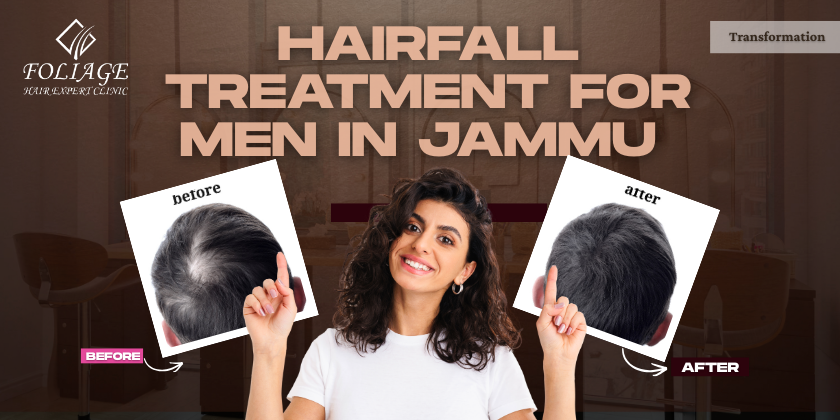
The Introduction to Restoring Originality Hair Fall Treatment for Men in Jammu

In the town of Goddesses, a quiet worry often weighs on the thoughts of its men. Whether you’re walking through the busy markets of Ragunath Bazar or driving through the business centers of Bahru Road and Satwari, how your hair looks can have a big effect on how confident you feel. For a lot of guys in Jammu, going from having thick, healthy hair to having a visible scalp is a daily source of concern. Fortunately, contemporary science and local knowledge have come together to make better solutions possible. Foliage Hair Expert Clinic is at the forefront of this change, providing a specialised hair fall treatment for men in jammu that values both accuracy in science and results that look natural. Awareness of the Biology of Male Hair Loss To solve the problem, you need to know what happens under the scalp. Hair growth happens in cycles, so at any given time, thousands of hair follicles are either growing or resting. The follicles start to shrink when this cycle is broken, which can happen because of genetics or hormonal changes such the presence of Dihydrotestosterone (DHT). Miniaturisation is the name of this process that makes hair thinner and, finally, causes hair loss. External elements also have an effect on Jammu’s unique environment. The area often has to deal with environmental problems, like hard water in Channi Himmat and dust and pollution that comes and goes near Narwal and Gangyal. These things can cause irritation, which makes the hair roots even less healthy. Targeted Solutions for Different Areas of Jammu Each neighbourhood in Jammu has its own way of living, and hair restoration should be the same way. We know that a young professional in Trikuta Nagar has different demands and schedules than an industrialist in Bari Brahmana or a student in Canal Road. The Foliage Method for Restoring Hair Our clinic uses a multi-faceted approach to treat male pattern baldness. We don’t think there is a “one size fits all” solution. Instead, we look at the exact stage of your hair loss and suggest the best way to move forward. 1. Stimulation of the follicles Before we talk about surgery, we try to wake up hair follicles that aren’t working. We can typically get the hair growth cycle going again using medical-grade treatments. This works especially well for men in Nanak Nagar and Kunjwani who are just starting to see a larger portion or a crown that is getting thinner. 2. More advanced FUE methods Follicular Unit Extraction (FUE) is a permanent option for people who are losing their hair. This method includes taking healthy follicles from the “donor” location (typically the back of the head) and putting them in the “recipient” area. This approach doesn’t leave linear scars as older ones do, which is why guys who enjoy shorter hairstyles on Apsara Road or BC Road love it. Keeping Your Scalp Safe from Local Factors The weather and water in Jammu can be bad. We typically tell our clients from Janipur and Paloura to wash their hair with filtered water to keep minerals from building up and blocking pores. Also, the severe heat in Jammu during the summer can make your scalp sweat and develop fungal problems, which are two of the most common reasons for temporary hair loss. Taking care of your scalp regularly is the first step to getting your hair to grow back. FAQs

The Introduction to Restoring Originality Hair Fall Treatment for Men in Jammu Read More »

Online Hair Consultation

An In-depth Guide to Digital Scalp Health – Online Hair Consultation

The quick change to digital healthcare has made it easier than ever to get competent medical help. For people who are having trouble with thinning hair or scalp problems that won’t go away, an online hair consultation By Foliage Hair Expert Clinic, you may get professional help with restoration without having to leave your home. This new way of doing trichology and dermatology makes sure you get the same level of attention and accuracy as if you were in a clinic, but in the comfort and privacy of your own home. The first step to getting your hair back to health is to know how a virtual session is set up. Hair doctors can now give precise diagnoses and long-term remedies for a wide range of problems by using high-definition images and extensive medical histories. How Digital Trichology and Dermatology Work A lot of people ask how an online hair consultation can be as helpful as meeting in person. This service works well because it collects data and analyses it visually in a structured way. 1. The Stage of Collecting Information Most of the time, you will have to fill out a long intake form before you ever talk to a skin doctor. This paper talks about your medical history, what you eat, how stressed you are, and how you take care of your hair right now. This context is essential for the diagnosis and treatment of illnesses that may be systemic rather than merely localised. 2. High-Resolution Visual Documentation Because hair experts can’t touch your scalp, clear pictures are the main way they figure out what’s wrong. You will need to give: 3. Video Interaction in Real Time You talk to a dermatologist over a safe video platform throughout the live part of your appointment. This lets the expert see how your hair moves, how thick it is, and how healthy your skin, hair, and nails are. This interactive part is where the expert guidance really becomes unique to you. Diagnosing Skin and Scalp Problems from Afar A virtual visit can help with more than simply hair loss. These sessions help certified professionals find different skin illnesses and long-term problems that damage the scalp’s environment. Taking Care of Long-Term Scalp Problems Conditions like eczema, psoriasis, and seborrhoeic dermatitis typically show signs of inflammation and flaking on the skin. A skin doctor can tell the difference between basic dandruff and more serious skin problems by looking at high-definition footage. Finding Infections Ringworm and fungal infections are two typical reasons for hair loss in patches. Doctors can make a precise diagnosis and treatment plan by looking at the form and texture of the area that is affected. This approach may include antifungal creams or medicated shampoos. Androgenetic Hair Loss and Pattern Thinning For men with male pattern baldness or women with thinning hair, a specialist can usually tell how far along the hair loss is only by looking at it. Then they can suggest medical care or perhaps talk about whether you could need surgery in the future. The Benefits of Working from Home It’s not just about convenience to see a dermatologist online; it’s also about getting help early. A lot of people put off getting treatment because they don’t have time to go to the clinic. Developing a Personalized Treatment Plan After the assessment is done, the doctor gives a systematic diagnosis and treatment plan. This is not a solution that works for everyone. Depending on what you find, the strategy might include: 1. Medications that require a prescription If the diagnosis includes hormonal thinning, the doctor can send you a digital prescription for FDA-approved drugs. These are meant to stop hair from falling out and wake up dormant follicles. 2. Hair care that is specific to your needs For people with sensitive scalps or fungal infections, a personalised routine with pH-balanced cleansers and nutrient-rich serums will be given. 3. Advice on diet and lifestyle Your expert advise will probably include suggestions for vitamins, minerals, and ways to deal with stress, since healthy hair is a sign of good health inside. 4. Tips for Cosmetic Dermatology In other circumstances, the expert may propose cosmetic dermatological procedures that can be done later in the clinic, including PRP (Platelet-Rich Plasma) therapy or particular laser treatments, to go along with what you’re already doing at home. Take charge of your hair health right now It’s not a good idea to wait for hair loss to “fix itself.” The sooner you get professional help, the more ways you have to keep your hair and grow it back. Digital platforms have made it easier than ever to see a dermatologist and start a professional journey toward a fuller head of hair. They have taken away the obstacles of time and distance. A virtual session will help you figure out what to do next, whether you’re struggling with a sudden case of hair loss or a long-term scalp problem. FAQs

An In-depth Guide to Digital Scalp Health – Online Hair Consultation Read More »

Book Free Appointment Now

Book Your Free Appointment Now and Take the First Step Toward Your Transformation