
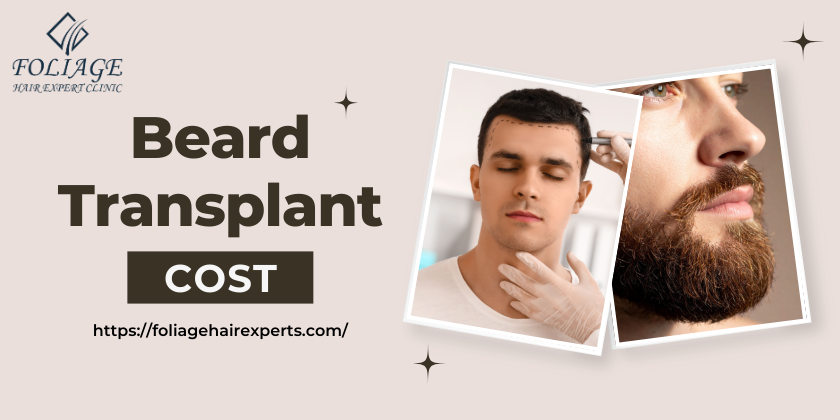
Having a thick, well-defined beard has gone from being a fleeting trend to a clear sign of personal style and masculinity. For a lot of men, though, genetics, scars, or uneven growth get in the way of getting that perfect look. This is where modern medicine can help by restoring facial hair permanently. Getting to know the beard transplant cost by Foliage Hair Experts is the first step for anyone looking to make an informed investment in their appearance.
The world of cosmetic surgery has become more accessible and advanced in technology by 2026. Price is important, but it’s also important to think about the value that competent surgeons bring and the long-term benefits of a high-quality transplant process.
What Makes a Beard Transplant Cost More?
There is no set price for restoring a beard. It is instead a formula that changes dependent on a number of clinical and personal criteria. At Foliage Hair Experts, we focus on a personalised approach, making sure that each patient gets a quote that is based on their unique facial structure and density goals.
1. The Number of Grafts
The most important thing that affects the cost of a beard transplant is how many hair grafts are needed to get the right density. A “graft” is a little piece of tissue that has one to four hair follicles in it.
- Partial Fill (Goatee or Sideburns): Usually requires 500 to 1,200 grafts.
- Full Beard Restoration: May require anywhere from 2,500 to 3,500 grafts depending on the number of grafts needed to cover the cheeks, chin, and neckline.
2. The Surgical Technique
The price is greatly affected by how the beard hair was taken out and planted.
- FUE (Follicular Unit Extraction): The gold standard in 2026, where individual follicles are removed from the donor area (usually the back of the scalp) and placed into the beard region. It offers a scar-less result and rapid recovery.
- DHI (Direct Hair Implantation): A more premium version of FUE where a specialized “Choi Pen” is used to implant the hair directly without creating pre-made incisions. This often carries a higher price tag due to the precision and specialized tools involved.
3. Surgeon Expertise and Clinic Reputation
Having surgery is as much an art as it is a science. A senior surgeon who is good at making beard growth patterns look natural would usually charge more than a general technician. It’s important to choose a reputable place like Foliage Hair Experts for beard transplantation since they will pay attention to the right angle and direction of the hair, which is necessary for a natural look.
The Pre-Surgery Phase: Making Plans for Success
Before you can get a beard restoration, you must have a full pre-surgery consultation. During this session, the medical staff looks at the hair on the back of your head that will be used as a donor and plans out the new beard line.
Medical Assessment
In 2026, standard cosmetic operations require health screenings before they can be done. This includes:
- Blood Tests: To check for clotting factors and underlying conditions.
- Scalp Analysis: Ensuring the donor hair follicles are healthy enough to survive the transition to the face.
- Design Mapping: Marking the areas for the mustache, goatee, and cheeks to ensure symmetry.
How to Get Through the Transplant Process
A beard transplant procedure usually takes between four and eight hours. It is done with local anaesthesia, so you stay awake and comfortable the whole time.
Taking out and putting in
The surgeon meticulously takes hair follicles from the scalp. The team had to choose certain grafts that look like facial hair because beard hair is naturally thicker and grows in single-hair units. How effectively the new hair mixes in with your existing facial hair depends on how precise this step is.
Care and recovery after surgery
The days after your surgery are very important for the graft to live. Most patients have mild redness and small scabs around the implanted follicles, which is a typical part of recovery.
The Timeline for Recovery
- Days 1-3: Focus on rest. Avoid touching or washing the face. You may notice slight swelling.
- Days 4-7: Mild redness begins to fade. Scabs start to form and will eventually flake off naturally.
- Weeks 2-4: The “Shedding Phase.” It is normal for the newly transplanted hair to fall out. Do not panic; the follicles remain healthy beneath the skin.
- Months 3-6: New, permanent beard growth begins to emerge.
- 12 Months: The final, dense results of your beard transplantation are fully visible.
Why should you choose Foliage Hair Experts?
We at Foliage Hair Experts think that restoring beard hair can change your life. To make sure that as many grafts as possible survive, our facilities have robotic assistance and microscopic extraction instruments that meet 2026 standards. We don’t charge any “marketing” costs that aren’t explicit, so you know exactly how much a beard restoration will cost when you come in for your first appointment.
We promise to follow up with you after your procedure, so you can be sure that medical specialists will be there for you every step of the way while you grow a full beard. We also have various payment plans and 0% EMI alternatives to make this permanent change in appearance available to everyone.
FAQs
In India, the average cost of a beard transplant in 2026 is between ₹40,000 and ₹1,50,000. The total cost depends on how many grafts are needed and whatever method (FUE or DHI) is used for the transplant.
Yes. A beard restoration is thought to be a permanent fix, just like a typical hair transplant. The hair follicles are taken from the “permanent zone” at the back of the head, which means they are genetically designed to grow for the rest of their lives, even after they are transplanted to the face.
Most guys need between 2,500 and 3,500 grafts to get a full beard. If you only need to fill in certain spots or a goatee, you could only need 500 to 1,500 grafts. The best approach to get an exact count is to see a doctor.
For the first 10 to 14 days after surgery, you shouldn’t shave the region where the hair was transplanted. You can carefully cut the hair once the scabs have completely healed and the skin is no longer sensitive. Most doctors say you should wait at least a month before using a regular razor.
The method is quite safe and doesn’t require any cutting. Some people may experience temporary side effects like minor redness, small swelling, and itching while their skin heals. When experienced professionals do the surgery utilising sterile hair transplant methods, serious problems are rare.
Yes, for sure. Modern facial hair restoration focusses on how and where the hair is implanted. Surgeons make sure that the new hair looks just like your natural hair by copying the natural exit angle of your original beard hair.
Yes. If you don’t have enough hair on your scalp, follicles can occasionally be taken from your chest or other parts of your body. However, scalp hair is the best donor source since its growth cycle and texture are most like those of beard hair.