
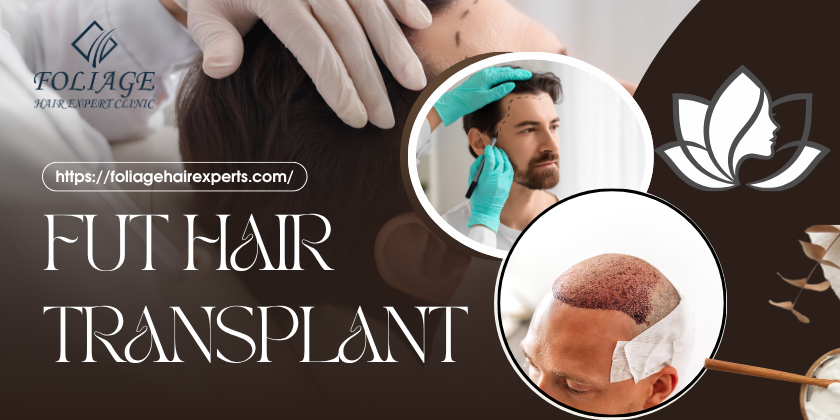
Choosing to treat significant hair loss requires a good understanding of the surgical procedures used to regain coverage. In cases of diffuse thinning in the crown area or serious recession of the hairline, the choice of the right surgical approach is vital to ensure a lifetime of natural density. In modern marketing new automated techniques are often touted, but the traditional strip harvesting technique remains a staple of surgical hair restoration. The most efficient and best option for patients who need a large number of grafts to cover large bald patches in a single session is a well-performed FUT hair transplant. At Foliage Hair Expert, our surgical teams focus on clinical precision to provide you with a safe, natural restoration that will stand the test of time.
The Mechanics of Follicular Unit Transplantation
The clinical basis of follicular unit transplantation fut is to remove a narrow strip of healthy tissue from the permanent zone at the back end sides of the scalp. This area , called the linear donor site , is full of hair that is genetically immune to the hormones that cause pattern baldness . Once the surgical team removes the strip, the open area is closed with advanced trichophytic closure techniques that allow the surrounding hairs to grow directly through the healing seam, greatly minimising the final visibility of the scar.
FUT Harvesting Process of Linear Strips
Donor Strip Excision > Stereo-Microscopic Dissection
Permanent Zone: Hair Isolated Follicular Units
Implantation Target: High Density in Areas of Thinning
Once the strip is secured, specialised technicians place the tissue under high-powered stereo-microscopes and dissect it into individual follicular units. These units contain clusters of 1, 2, 3 or 4 hairs, as expected. This dissection is done in vitro under direct magnification with all protective tissue around each root left intact. This careful handling reduces the risk of cutting the root and keeps the roots healthy and viable for successful implantation in the recipient site.
Option Analysis: Advanced Balding FUE vs. FUT
When patients consider options, they often compare the two main types of surgical hair restoration. The main difference when looking at fue vs fut is purely in the way the surgical team harvests the donor tissue. In a typical fue procedure, the surgeon extracts follicles one at a time right from the scalp using a small motorised punch tool. This avoids a long seam, but requires a much larger total harvest area and sometimes limits the total yield if the patient has low hair density.
Clinical Comparison FUT and FUE
Metric FUT (Strip Method) FUE (Punch Method)
Harvest Technique Linear Tissue Strip Individual Punches
Average Graft Survival Rate Very High Variable (Manual)
Full Scalp Shave Donor Strip Only Shaving Required
Maximum Yield Session Up to 4,500 Grafts Up to 3,000 Grafts
Instead the fut technique restricts the harvest to a single narrow strip of tissue. This leaves the surrounding areas completely untouched, preserving the remaining donor hair for any touch ups later in life. When hair loss is advanced, it is very important to maximise the donor site over a lifetime. The strip method allows the medical team to retrieve a high number of grafts in one session without over-harvesting or thinning the back of the head. It is an extremely strategic choice for large patterns of baldness.
Maximising Graft Yield & Graft Integrity
The main advantage of opting for a strip-based type of hair transplant is the better structural integrity of the harvested grafts. Unlike a punch tool that pulls clusters blindly from the scalp, technicians isolate each cluster under a microscope, so the delicate sebaceous glands and supporting tissues surrounding the roots are left entirely intact. This structural protection results in higher post-placement survival rates.
This method works very well for large thinning patches requiring high density packing. During the implantation phase, the surgeon creates a soft, natural frame along the front hairline with single-hair units and adds more depth to the visual volume by placing larger two- and three-hair units further back. This careful planning makes sure that your new hair will grow in the same direction as the natural growth of your existing hair line.
Donor Area Management and Healing Time
One frequent concern of patients contemplating this approach is the development of a linear scar along the posterior scalp. But the modern closure methods have changed the healing process, so it is important to know that a mark will exist. Our surgeons use fine, layered sutures that pull the edges of the skin together with no tension. This technical approach ensures that the line heals as a thin, easy-to-hide mark that is virtually invisible with a standard haircut.
1. Accurate Detachment of Strip from Donor Site
2. Layered Trichophytic Closure of Seam
3. Microscopic Isolation of Hair Bundles
4. Expert Implantation in Recipient Zones
A strip harvest does not require complete shaving of the surrounding donor area. Patients can easily maintain their existing hairstyle to hide the stitches from day one. This means that the recovery process is much more discreet than a standard fue hair transplant, where a full scalp shave is often required before the surgery. Superficial sutures are usually removed within ten to fourteen days leaving a clean and healthy foundation for long-term growth.
Why Microscopic Separation Is Important in Modern Surgery
The success of a high volume restoration depends on the skill of the clinical staff behind the scenes. After the donor hair strip is removed, it must be divided into individual follicular units in a rapid and precise fashion. If the tissue is left too long at ambient room temperatures or treated roughly, the survival rate of the roots drops dramatically.
We use constant temperature controlled storage solutions and special LED illumination systems in our lab to keep the grafts pristine during separation. Each technician simply works to maintain the natural protective fat layers around the roots. The level of care is what separates the best hair transplant procedures from the cheap options and has a direct impact on how thick and full your hair will look in twelve months.
Creating a Unified Restoration Plan
Most people need multi-year management plans to cope with progressive hair loss. By choosing a strip procedure early on, you can address major bald areas while leaving the rest of your scalp options totally open. The remaining areas on the back and sides can be harvested with a punch-based follicular unit extraction fue approach or a second strip session if the thinning continues over the next 10 years.
Our team creates custom, long-term plans based on your age, family history of thinning, and hair’s structural properties. You will also have your scalp elasticity and current density assessed to make sure that each session safely moves you closer to your aesthetic goals. Your scalp is a limited and highly valuable resource. We treat it as such to help you achieve a balanced natural look. We grow old with you.
Choose Clinical Excellence with Foliage Hair Expert
Investing in your appearance is a life changing decision that deserves total transparency, professional safety and proven surgical skill. Foliage Hair Expert offers a high-quality medical service which combines refined artistic design and rigorous scientific standards. Our operating theatres are fitted with state-of-the-art medical technology and our medical teams are highly experienced in handling complex high volume grafts.
When you choose an analytical fut hair transplant in our clinic, you are choosing a team that cares about long-term hair health just as much as immediate visual density. We walk with you through every milestone of the journey from your first microscopic tissue health check right through to your final post op wash. Let our clinical experience transform your hair profile, so you can walk back out into the world with a permanent, natural head of hair and renewed confidence in yourself.
FAQs
The only difference is in the way it is harvested. In a strip surgery , a narrow strip of tissue is removed from the permanent zone . This strip is then dissected under a microscope to individual units . Not a single line, but small dots are left behind. Extraction by punch takes individual clusters directly from the scalp, one at a time
In the hands of experienced surgeons, using modern trichophytic closure techniques, the mark heals as a very fine, thin line. The hair around it grows straight through the seam . It can be very easily concealed under a normal haircut . You can only see it if you shave your head down to the skin.
By strip harvesting, the surgical team can harvest a large volume of healthy grafts in one day without over harvesting the back of the scalp. The roots are separated under direct microscopic view so that the tissue survival rate is exceptionally high and the maximum possible volume for extensive thinning is provided.
No, you do not have to shave the whole head with this technique. The surgeon only has to cut the hair within the narrow donor strip that is harvested. The longer hair above the site naturally falls down to cover the stitches immediately after the session, so you can return to social settings with minimal downtime.
The transplanted hair will fall out naturally in the first 3-4 weeks after surgery. By the third or fourth month, new, permanent growth begins to appear. The volume will change significantly at the six month point, with full density arriving in a year.
Local anaesthesia is applied during the procedure so that you do not feel any discomfort when the grafts are transferred. In the first 2-3 days of healing, you may feel a tightness around the donor line, which can easily be managed by regular over-the-counter pain medication available from our clinic.