
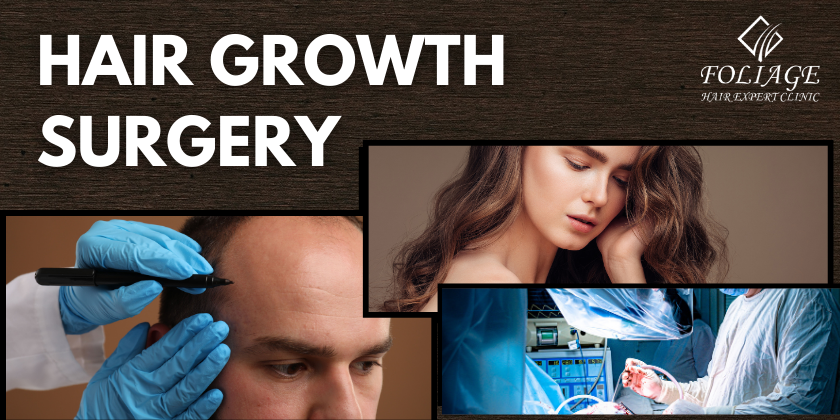
For many individuals, experiencing thinning hair or a receding hairline is more than just a physical change; it is an emotional challenge. As technology in 2026 continues to evolve, the methods available to treat bald patches and restore a full head of hair have become increasingly sophisticated. While there are numerous topical solutions, a permanent hair growth surgery is still the best way for people who want to change their lives for good. Foliage Hair Expert Clinics is at the very edge of modern medical advances, providing individualised care that puts patient comfort and natural beauty first.
To get your hair back, you need to know how hair loss happens biologically and how precise surgery is needed to stop it. If you’re battling with male pattern baldness or another type of persistent thinning, learning how these procedures work is the first step toward feeling better about yourself.
Learning about the biology of hair restoration
To understand how well a hair transplant procedure works, you need to know why some hair stays and some falls out. Androgenetic alopecia is the most common type of hair loss. It is a genetic disorder in which hair follicles on the top and front of the scalp are sensitive to particular hormones. But the hair on the back and sides of the head, which is sometimes dubbed the “donor area,” usually doesn’t respond to these hormones.
During a hair transplant, these healthy hair follicles are transplanted from the donor site to the areas where hair is thinning. The follicles keep their genetic resistance even after being transferred, thus the transplanted hair grows naturally for the rest of the patient’s life.
FUE and FUT: A Comparison of Modern Surgical Techniques
There are two main ways to restore hair that are popular in the industry. It depends on your hair kind, how bald you are, and how you choose to live your life.
Follicular Unit Extraction (FUE)
FUE is a minimally invasive method that takes out individual follicular units one at a time. Patients who choose to keep their hair short really like this approach because it doesn’t leave a straight scar. Instead, it produces small, dot-like scars that are almost impossible to see until they have healed.
- Pros: Rapid recovery, no stitches, and minimal post-operative discomfort.
- Cons: Generally more time-consuming and can be more expensive than other methods.
Follicular Unit Transplantation (FUT)
Follicular unit transplantation (FUT), often known as the “strip method,” entails taking a thin strip of skin from the back of the head. Then, under powerful microscopes, this strip is cut into small pieces that can be used for implantation.
- Pros: Allows for a higher number of grafts in a single session and is often more cost-effective for extensive coverage.
- Cons: Leaves a fine linear scar in the donor area, which is easily hidden by longer hair but may be visible with very short fades.
The Surgical Process in Steps
Getting hair growth surgery at Foliage Hair Expert Clinics is a quick and safe operation that is made to be as accurate as possible.
- Preparation and Mapping: The surgeon identifies the bald area and marks the new hairline, ensuring a natural look that complements your facial features.
- Anesthesia: Local anesthesia is applied to both the donor and recipient sites, ensuring you feel no pain during the 4 to 8-hour session.
- Hair Grafting: In the harvesting phase, follicles are carefully removed. Maintaining a healthy blood supply to the scalp is vital, so surgeons work at a specific depth to protect the underlying tissue.
- Implantation: The surgeon creates tiny incisions in the recipient area. The hair follicles are placed at specific angles and densities to mimic the natural growth pattern of your original hair.
Hair Growth and Recovery Over Time
A lot of patients are surprised by the “shedding phase.” The hair shafts that were transplanted will fall out about two to three weeks after the surgery. This is a natural aspect of the procedure. The “root” or follicle stays alive under the skin and goes into a resting period before new hair starts to develop.
The Growth Timeline
1 to 3 Months: The scalp heals, and the hair follicles stay inactive.
4–6 Months: Fine, fresh hairs start to grow from the donor site transplants.
A Year: You can usually see the end result, which is hair that is full thickness and length.
Talking about safety and possible side effects
Being aware of possible side effects is important for any medical procedure. These operations are safer than ever because to modern technology, yet some short-term responses are normal:
- Swelling: Usually happens for 2–3 days around the forehead and eyes.
- Itching: A indication that things are getting better, which can be treated with specific sprays.
- Numbness: A transient lack of feeling in the location where the donor came from that usually goes away in a few weeks.
We give you a full aftercare kit and support 24/7 at Foliage Hair Expert Clinics to make sure your recovery goes as smoothly as possible.
Is Hair Restoration the Right Choice for You?
Not everyone is a good candidate for surgery. The quality of your donor region has a big impact on how well you fare. If the hair on the back of your head is extremely thin, there may not be enough tiny grafts to cover the bald spots well.
The only way to find out what the best hair loss treatment is for you is to get a full consultation. We look at the condition of your scalp, how thick your hair is, and how it will likely fall out in the future to design a plan that will work for a long time.
Your Way to a Thicker Head of Hair
Deciding to deal with hair loss is a big step. Foliage Hair Expert Clinics lets you bridge the gap between how you feel and how you look by blending the beauty of natural hairline design with the scientific precision of current hair transplant surgery.
Don’t let your hair getting thinner affect how confident you are. You may take care of your hair’s future with a permanent treatment that grows with you.
FAQs
You will feel a few pinpricks at first because the treatment is done under local anaesthesia, but the rest of the surgery is almost painless. Most patients pass the time by watching films or listening to music.
The effects are thought to be lasting because the hair comes from an area that is resistant to DHT. Your “native” hair (the hair that wasn’t transplanted) may continue to thin over time, but the hair that was transplanted will keep growing for the rest of your life.
Modern hair grafting uses “single-hair units” for the front hairline. This makes the hair look soft and feathery, which is really natural. A experienced hairstylist would have a hard time seeing the difference.
Most people go back to employment that doesn’t require strenuous activity within 3 to 5 days. We suggest waiting at least 10 to 14 days to preserve the new grafts if your profession requires heavy lifting or other hard work.
Once the hair around the tiny dot scars grows a few millimetres, they are almost impossible to see. The linear scar in FUT is a narrow line that hair of medium length can readily hide.
No. The procedure brings hair back to certain spots, but it doesn’t stop androgenetic alopecia from getting worse in your original hair. This is why we typically suggest that people have both surgery and medical care.
Yes, ladies are typically great candidates, especially those who have traction alopecia or thinning hair in one area. But women with “diffuse” thinning all over their scalp need to be carefully checked to make sure the donor spot is stable.