
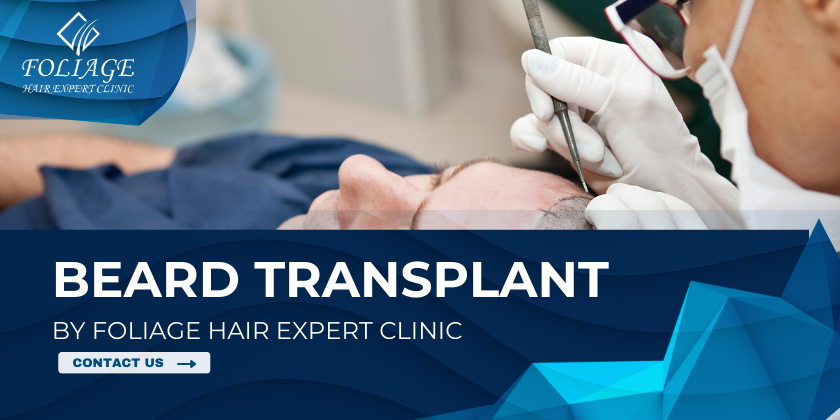
A broad, well-defined beard has been a sign of manliness and distinctive flair for a long time. But for a lot of guys, genetics, scarring, or health problems make it hard to get that thick, rough look. When patches show up or beard growth stays thin even after using different grooming products, getting help from a professional is a good option. This is where a beard transplant offers a permanent solution for those seeking to redefine their facial profile.
We at Foliage Hairexperts put patient safety and natural-looking results first. Men can make smart choices about how they look by learning about the science behind shifting hair from one place of the body to another. This article goes over how the surgery works, what to expect during the healing phase, and what to expect on the way to a fuller beard.
Why Facial Hair is Important
Many people think that being able to grow a beard is a sign of self-confidence. Some people like the clean-shaven image, while others think that a patchy beard doesn’t look mature or tough enough. There are a number of things that can cause the cheeks, chin, or moustache area to not be dense:
- Genetics: Just as male pattern baldness affects the scalp, hereditary traits dictate the thickness and distribution of facial follicles.
- Scarring: Past injuries, acne scars, or burns can damage skin tissue, preventing natural hair from emerging in those spots.
- Medical Conditions: Issues like alopecia areata can cause localized patches of hair to fall out, affecting both the head and the face.
- Hormonal Fluctuations: Low levels of specific hormones can sometimes result in sparse growth, even if the follicles are present.
The Science Behind Hair Restoration
The main part of any facial hair procedure is moving healthy follicles. Facial work is much more artistic than scalp procedures that cover big patches of baldness. To make sure the results don’t look “pluggy” or fake, the surgeon needs to match the direction, angle, and density of the existing hairs.
The Donor Area
The source of the new hair is crucial. Typically, the surgeon selects the back or sides of the scalp as the donor area. These hairs are genetically programmed to be resistant to the factors that cause hair loss. In some cases, if the scalp hair is too fine or unavailable, other body hair—such as chest or existing lower beard hairs—can be utilized.
The Recipient Areas
The areas receiving the new follicles are known as the recipient areas. These usually include the beard line, the mustache, the soul patch, and the sideburns. The skin on the face is thinner and more sensitive than the scalp, which means the surgeon must use specialized tools to create tiny openings for the hair grafts.
Getting to know how hair transplants work
There are two primary techniques used in the industry today. While both involve moving hair, the method of extraction differs significantly.
The FUE Method
Follicular unit extractions (FUE) have become the gold standard for facial restoration. In this process, the surgeon uses a motorized micro-punch tool to harvest individual follicles one by one. This method is preferred for the face because it does not leave a linear scar. Instead, it leaves tiny, dot-like marks in the donor zone that become virtually invisible once the surrounding hair grows back.
Follicular Unit Transplant (FUT)
Though less common for the face, a follicular unit transplant involves removing a small strip of tissue from the donor site. The follicles are then dissected under a microscope before being placed in the face. While this can provide a large number of grafts required for major reconstructions, the linear scar it leaves behind makes it less popular for men who prefer to keep their hair short.
Finding out how many grafts are needed
One of the most common questions involves the volume of hair needed. The count depends entirely on the current state of the beard and the patient’s goals.
- Filling Patches: If a patient only has small gaps on the cheeks, they might only need 300 to 700 grafts.
- Full Reconstruction: For someone who cannot grow any facial hair, a complete beard transplant surgery might require 2,500 to 3,000 grafts.
- Mustache Only: A standard mustache usually requires between 350 and 500 grafts to look full and natural.
The Step-by-Step Process
A typical session at Foliage Hairexperts follows a structured path to ensure comfort and precision.
Consultation and Design
The process begins with a design phase. The surgeon draws the new beard line, taking into account the patient’s bone structure and facial symmetry. This is the time to discuss the thickness and shape.
Extraction and Preparation
Under local anesthesia, the follicles are harvested using the fue method. These hair grafts are then sorted and cleaned. Single-hair units are used for the edges of the beard to create a soft, natural transition, while multi-hair units provide density in the center.
Implantation
This is the most time-consuming part. The surgeon meticulously places the hairs transplanted into the face at a very shallow angle. On the cheeks, hair grows downward; on the chin, it may grow in different directions. Replicating this is what defines a successful surgery.
Handling Expectations: Costs and Side Effects
Investing in your appearance is a big step, and it is important to be aware of the logistical side.
Beard Transplant Cost
The beard restore cost is generally calculated per graft. Factors affecting the price include the surgeon’s experience, the technology used, and the geographic location of the clinic. While it may seem like a high upfront cost, many men view it as a permanent investment that removes the need for expensive “thickening” serums or temporary fillers.
Potential Side Effects
Like any surgical intervention, there are minor side effects to monitor. Most patients experience:
- Redness and swelling in the face for 3 to 5 days.
- Small scabs forming around the transplanted follicles.
- Temporary numbness in the donor or recipient sites.
These symptoms are part of the natural healing process and typically resolve within a week.
Recovery and Post-Op Care
The first 48 hours are the most critical. Patients are advised not to touch or wash their face during this window to allow the grafts to take root. By day five, gentle washing is permitted.
The Shedding Phase
Many patients panic about two weeks after surgery when the hairs transplanted begin to fall out. This is a normal phenomenon known as “shock loss.” The hair shaft falls out, but the follicle remains healthy and dormant beneath the skin. New beard growth usually begins after three to four months.
Long-Term Maintenance
Once the beard has fully matured (usually around the 9 to 12-month mark), it can be treated just like a natural beard. You can shave it, trim it, and style it. Because the hair comes from the scalp, it will continue to grow at the same rate as the hair on your head, meaning regular trimming will be necessary to keep it at the desired length.
Making the Right Team Choice
A beard transplant is as much an art as it is a science. Success depends on the surgeon’s ability to understand facial aesthetics. At Foliage Hairexperts, we combine medical precision with a keen eye for design, ensuring that your new facial hair looks like it was always there.
If you are struggling with the effects of hair loss on your face or are tired of dealing with an uneven beard, professional restoration might be the answer. By utilizing the latest in hair restoration technology, we help men achieve the look they deserve.
Would you like to see a gallery of our recent transformations or schedule a digital mapping session to see how a new beard line would look on your face?
Key Technical Data for Patients
| Feature | FUE Method | FUT Method |
| Scarring | Minimal (Tiny dots) | Linear (Thin line) |
| Recovery Time | 3-5 Days | 10-14 Days |
| Graft Survival | High | Very High |
| Best For | Facial work & short hair | Large scalp areas |
Getting a better beard takes both time and talent. Modern methods make sure that a patchy beard is a thing of the past, whether you want a modest touch-up or a complete change. You can easily get a lasting, masculine look by paying attention to the health of the donor area and the accuracy of the implantation.
FAQs
The number of grafts required depends on the desired density and current patchiness. For a full beard restoration covering the cheeks, chin, and mustache, most patients at Foliage Hairexperts require between 2,500 and 3,000 grafts. If you are only looking to fill small patches or sharpen the goatee area, 500 to 1,200 grafts may be sufficient. During your consultation, we use digital mapping to provide an exact count tailored to your facial structure.
Yes, the FUE method (Follicular Unit Extraction) is the gold standard for beard hair transplant procedures in 2025. Because it involves extracting individual follicles using a micro-punch tool, it avoids the linear scarring associated with the older strip (FUT) method. This is crucial for facial work, as it ensures the donor area heals quickly with virtually invisible dot-like marks, allowing you to keep your hair short without any visible signs of surgery.
The beard transplant cost varies based on the complexity of the case and the total hairs transplanted. On average, prices in India range from ₹40,000 to ₹1,50,000. At Foliage Hairexperts, we offer transparent, all-inclusive packages that cover the initial surgery, post-op medications, and follow-up PRP sessions to ensure the highest survival rate for your new beard hairs.
Patience is key in hair restoration. You will notice initial growth in the first 2 weeks, followed by a temporary “shedding phase” where the transplanted hair falls out—this is a normal part of the healing process. New, permanent beard growth typically begins around month 3. Most patients see significant density by month 6, with the final, polished results visible between 9 to 12 months post-procedure.
While beard transplant surgery is a minimally invasive outpatient procedure, minor temporary side effects like redness, swelling, and mild itching in the recipient areas are common for the first 3 to 7 days. Long-term risks are extremely rare when performed by experts, but may include small cysts or folliculitis if proper hygiene isn’t maintained. We provide a comprehensive aftercare kit to prevent these issues and ensure smooth healing.
Yes, a transplant is often the most effective way to hide facial scars or permanent patches caused by stable alopecia areata. By carefully placing follicles into the scar tissue or bald spots, we can restore a uniform look. However, if the hair loss is currently active or spreading, our surgeons may recommend a medical treatment plan first to stabilize the condition before proceeding with follicular unit extractions.