
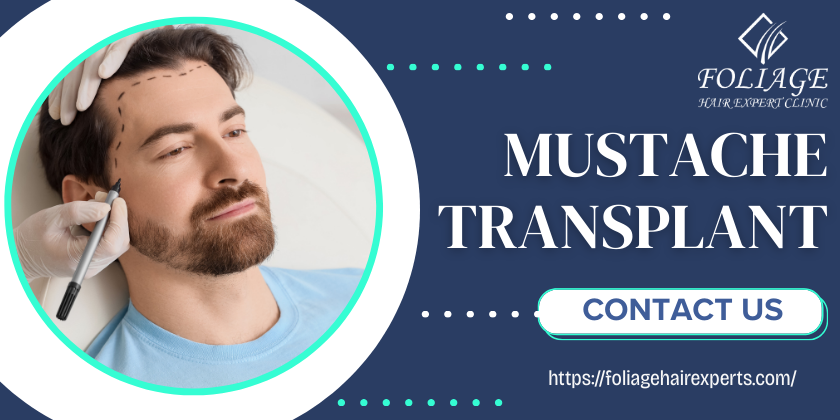
Facial hair is a defining feature for many men that makes them feel more confident and grown up. But sparse or uneven growth on the upper lip can make them feel less confident. This is a common problem that can be caused by genetics, scarring, or medical conditions. Fortunately, modern medical advancements have made it possible to achieve a fuller look through a dedicated mustache transplant procedure. This permanent fix lets hair grow in a way that looks natural and fits in perfectly with the rest of your face.
At Foliage Hair Experts, our main goal is to give our clients results that look real. We help people from Jammu, Delhi NCR, Mumbai, Ludhiana, and Chandigarh reach their aesthetic goals by using the most up-to-date methods for restoring facial hair. This guide goes into detail about the procedure, from the first consultation to the last recovery.
Explaining the Necessity for Facial Hair Restoration
A thick, well-defined moustache is not just a matter of vanity; it may also be about face symmetry and self-expression. Many men have trouble with uneven areas or not growing at all. Here are some possible reasons why this happens:
- Genetics: Often, the ability to grow a thick mustache is determined by hereditary factors.
- Scarring: Past injuries, burns, or surgical procedures on the face can leave behind scar tissue where hair no longer grows.
- Medical Conditions: Conditions such as alopecia areata can cause patchy hair loss on the face.
- Hormonal Changes: Variations in testosterone levels can sometimes affect the density of the beard and moustache.
For those who have tried topical solutions without success, a surgical approach offers a reliable and lifelong fix.
Who Is a Good Candidate?
Not everyone is an immediate fit for this surgery. A good candidate is typically someone who has sufficient scalp hair or beard hair to serve as a donor source. During a consultation at our clinics in Delhi NCR or Mumbai, our hair restoration surgeons evaluate the following:
- Donor Supply: The patient must have a healthy donor area, usually at the back or sides of the head, where hair is genetically resistant to thinning.
- Skin Health: The recipient area on the upper lip must be healthy and free of active infections.
- Realistic Expectations: Understanding that the transplanted hair will take time to grow and mature is vital for patient satisfaction.
The Mustache Transplant Procedure Explained
The process of a moustache hair transplant is a refined version of traditional scalp restoration. It requires a high level of precision because the face is highly visible and the skin is thinner than the scalp.
Step 1: Design and Planning
The first step involves sketching the desired shape of the mustache. Our experts work with patients in cities like Ludhiana and Chandigarh to design a look that complements their jawline and facial structure.
Step 2: Extracting the Grafts
Most modern procedures use the Follicular Unit Extraction (FUE) method. Using a micro punch tool, the surgeon harvests individual follicular units from the donor area. These units are typically taken from the back of the head because scalp hair closely mimics the texture and growth cycle required for the face. In some cases, beard hair can also be used if the texture is a better match.
Step 3: Preparing the Recipient Site
Small, precise incisions are made in the upper lip area. The angle and direction of these incisions are critical. Mustache hair naturally grows downward and slightly outward; hence, the surgeon must replicate this pattern to ensure natural results.
Step 4: Implantation
The harvested hair grafts are then carefully placed into the incisions. The number of grafts required usually ranges between 300 to 700, depending on the desired density. This part of the moustache transplant procedure is delicate and can take several hours to complete.
Recovery and Long-Term Care
After the surgery, the body needs time to heal. Patients might notice some minor side effects such as redness, swelling, or small scabs around the recipient area. These are normal and usually fade within a week.
The Growth Timeline
It is important to remember that the transplanted hair will initially shed. This is a natural part of the process called “shock loss.” After about three months, the new hair will start to grow from the relocated follicles. By the six-to-nine-month mark, you will see a significant increase in density.
Maintenance
Once the hair has matured, it can be treated just like a natural mustache. You can trim it, style it, and even shave it. The hair will continue to grow for a lifetime because the follicles were taken from a permanent donor area.
Technical Comparison of Methods
| Feature | FUE (Follicular Unit Extraction) | FUT (Follicular Unit Transplantation) |
| Extraction Tool | Micro punch | Scalpel (Strip method) |
| Scarring | Tiny, dot-like scars (barely visible) | Linear scar in the donor area |
| Recovery Time | Fast (usually 2-5 days) | Longer (10-14 days for stitches) |
| Ideal For | Small areas like mustache transplant | Large-scale hair restoration |
Availability in Different Areas and Expert Care
Foliage Hair Experts provides specialized care across Northern and Western India. Whether you are seeking a beard transplant to connect with your mustache or a standalone procedure, our centers are equipped with the latest technology.
- Delhi NCR & Chandigarh: Serving as central hubs for advanced cosmetic surgery.
- Mumbai: Catering to a wide demographic looking for aesthetic perfection.
- All Jammu & Ludhiana: Bringing high-end hair restoration services to the local community.
Our hair restoration surgeons are trained to handle complex cases, including those involving alopecia areata or extensive facial scarring. We prioritize safety and natural aesthetics above all else.
Figuring out Grafts and Density
The success of a beard and moustache procedure depends heavily on the quality of the hair grafts. Each graft contains one to four hairs. For the upper lip, surgeons often prefer single-hair follicular units at the borders to create a soft, natural edge, while multi-hair units are used in the center for density.
The number of grafts is determined during the initial evaluation. A thin mustache might only need 300 grafts, while a full reconstruction could require significantly more. By using micro punch technology, we ensure that the trauma to the skin is minimized, which leads to a faster recovery and better survival rates for the follicles.
Overall Thoughts
Getting a moustache transplant is a big decision. It will affect your face permanently and change the way it looks. By selecting an experienced team like Foliage Hair Experts, you ensure that the procedure is performed with the highest standards of medical care.
If you are tired of a patchy look and want a permanent solution that offers natural results, contact our offices today. Whether you are in Delhi NCR, Mumbai, Ludhiana, or Jammu, we are here to help you regain your confidence with professional facial hair solutions.
Would you like me to set up a virtual meeting with one of our top surgeons to talk about your unique facial hair goals?
FAQs
In 2025, the cost of a mustache transplant in Jammu typically ranges from ₹30,000 to ₹60,000, depending on the number of hair grafts required. In metro hubs like Delhi NCR and Mumbai, prices may be slightly higher, often reaching ₹80,000 due to premium facility costs. At Foliage Hair Experts, we offer competitive, transparent pricing for patients traveling from Chandigarh and Ludhiana, ensuring world-class results without the “metro premium.”
The number of grafts varies based on the desired density and the existing gap. For a patchy upper lip, 300 to 500 grafts are usually sufficient. For a full reconstruction (covering scars or a cleft lip mark), up to 800 grafts may be used. During your consultation in our Jammu or Delhi centers, our surgeons use high-precision mapping to determine the exact count needed for a natural look.
Yes, but it depends on whether the condition is stable. If the alopecia areata has been dormant for over a year, a transplant can effectively cover the bald patches on the face. Our experts in Mumbai and Ludhiana specialize in treating medical hair loss, ensuring that the recipient area is healthy and ready to sustain new follicular units before the procedure begins.
The initial healing phase is very quick. Most patients can return to work within 3 to 5 days. For those traveling to our Jammu clinic from Chandigarh or Ludhiana, we provide a “Travel-Safe Aftercare Kit.” While minor redness and scabbing occur in the first week, the transplanted hair is firmly rooted within 10 days, allowing for a comfortable journey back home.
Absolutely. We prioritize natural results by harvesting individual follicles from the donor area (usually the back of the scalp) that best match the texture of your facial hair. By implanting hair grafts at a precise downward angle—mimicking your natural growth pattern—the results are indistinguishable from your original mustache. This meticulous approach is what makes us a preferred choice for clients in Mumbai and Delhi.
Common side effects like mild swelling and itching are temporary and resolve within a week. In hot and humid climates like Mumbai or Jammu, we advise patients to stay indoors and avoid heavy sweating for the first 7 days to prevent infection or irritation in the recipient area. Our hair restoration surgeons provide specific pH-balanced sprays to keep the grafts cool and hydrated.
Once the transplanted hair starts growing (usually after 3 to 4 months), it behaves exactly like your natural beard hair. You can shave, trim, and style it as you wish. The follicles are permanent and will continue to grow for a lifetime. This makes it a popular long-term solution for men across Delhi NCR and Jammu who want to maintain a specific grooming aesthetic.